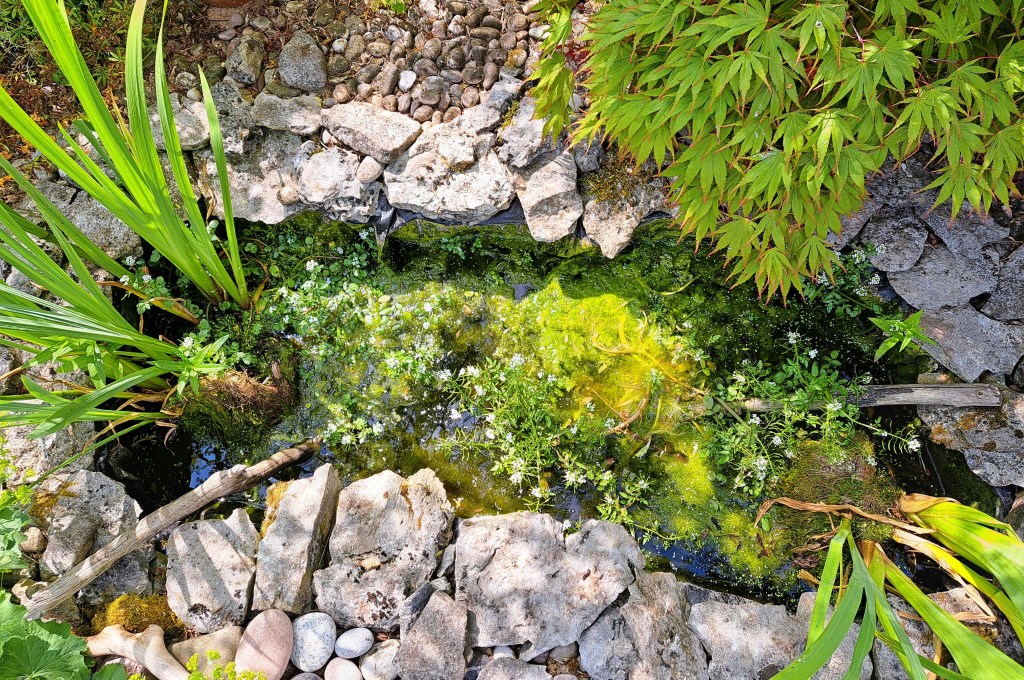
The larger of the two tiny ponds in our little garden is looking very sorry for itself. In fact, it’s looking like a new and frightening lifeform is about to emerge. The hedgehog who prickled its way over the cobbles for a quick evening slurp in April has long since sought a less hazardous watering hole. The few lingering frogs, presumably outcast or down on their luck, give me dark looks before plopping half-heartedly into the brackish mire. Feisty sparrows scrap all day with scatty blackbirds for a shot on the bathing perch. It’s been a dry end to spring alright and a hot start to summer. Which in south Cumbria, can only mean one thing: rain, lashings of the stuff, is barrelling our way.
But whilst it’s still in the post, what a fabulous time it’s been for drying clothes and to be out and about. Plenty of folk, like those below, were out trotting the lanes between Kirkby Lonsdale and Sedbergh the other day, their immaculate wagons gleaming – and their horses’ oblations steaming – in the sunshine.
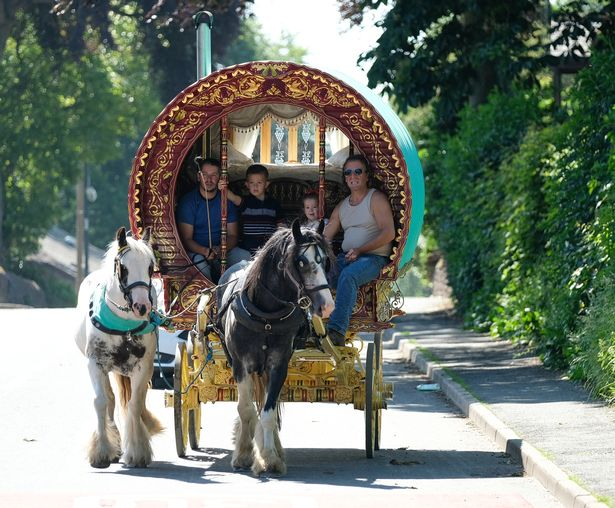
A traditional ‘vardo’, stock photo
The British media seems to have a fairly ogre-ish fascination with the traveller community. Derisory ‘fly-on-the-wall’ mockumentaries seeking to sensationalise quirky traditions for profit sit uneasily next to blistering headlines decrying the latest dodgy traveller campsite. We’re intrigued by their unfettered lifestyle but that magnetism doesn’t extend to our backyard. I was lucky enough to teach lots of traveller kids – they were great, for the most part, and never left you doubting how things stood.
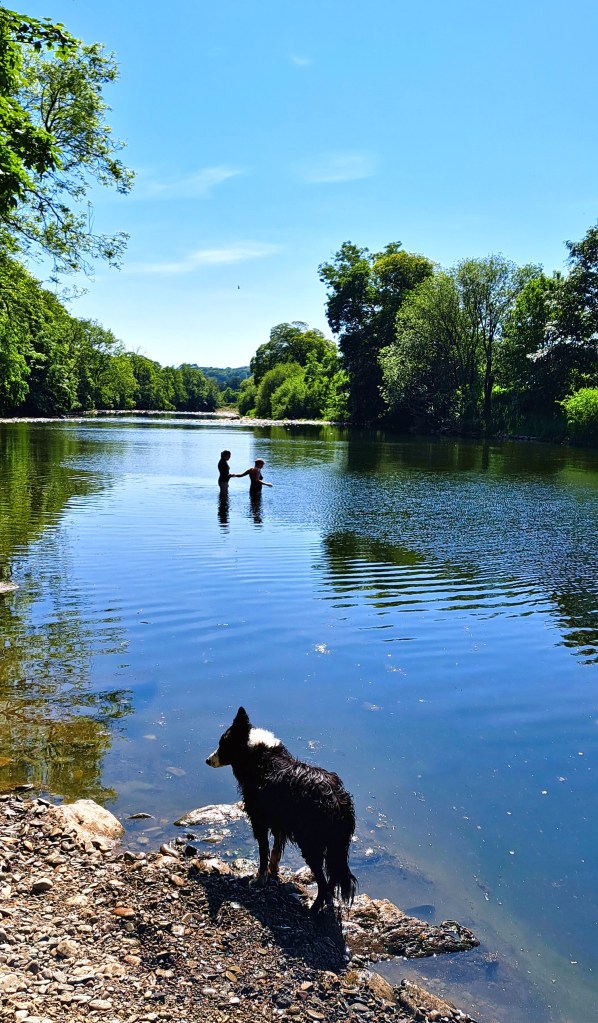
Jessie and bathers, River Lune
This was taken near Sedbergh, one of three pictures I took on consecutive days, no more than twenty minutes in a 14 year-old Aygo from Burton in Kendal, that show just a fraction of the diverse landscapes within our little corner of NW England. The tiny path through woods to the river was heady with past-it ramsons and musty with dog’s mercury wilting beneath an aphid-sapped canopy.
Under a torrid sun and through alder, oak and sticky sycamore, the Lune wallowed rather than flowed; a couple of flamingos and a hippo wouldn’t have seemed out of place in a very sub-saharan scene. We did see several heron, oystercatchers, a little family of goosanders and electric blue-green dancing demoiselles. And at sluggish parts of the shoreline, I’m afraid, large drifts of fairly nasty-looking sludge. Hopefully only ‘farm run-off’, which is bad enough, rather than the raw sewage that water companies seem so keen on dumping these days. What wasn’t a problem 15 years ago isn’t going anywhere fast whilst the cost of fines and dividends remains lower than the investment required to unbugger the situation. Only the stouter-hearted members of our family braved the brine.
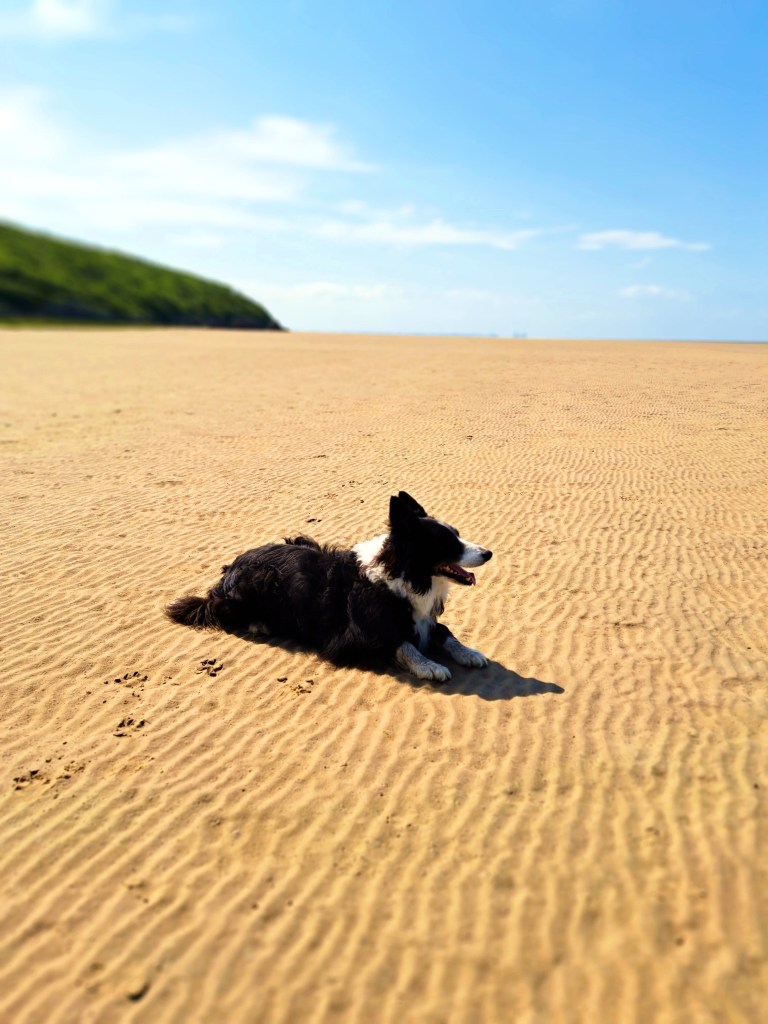
Arnside Point, Heysham in the haze
A day earlier, twenty minutes from home in the opposite direction and we could very well have been in the Sahara, so vast are the sands of Morecambe Bay at low tide. It’s not the sort that gets whipped up by the wind though, causing all kinds of consternation in your undercrackers. It’s heavy with thousands of years of Lakeland fluvial deposits which have created a mineral-rich habitat for billions of marine invertebrates.
Stone-age axes found at nearby Dog Holes cave suggest that this dependable source of easily-accessible protein has been important for human development in the area for many millennia. An osprey appeared on our way back upsetting a couple of hot and bothered anglers. It trawled the narrow estuary for twenty minutes without success and flew off. The fishermen were happy then.
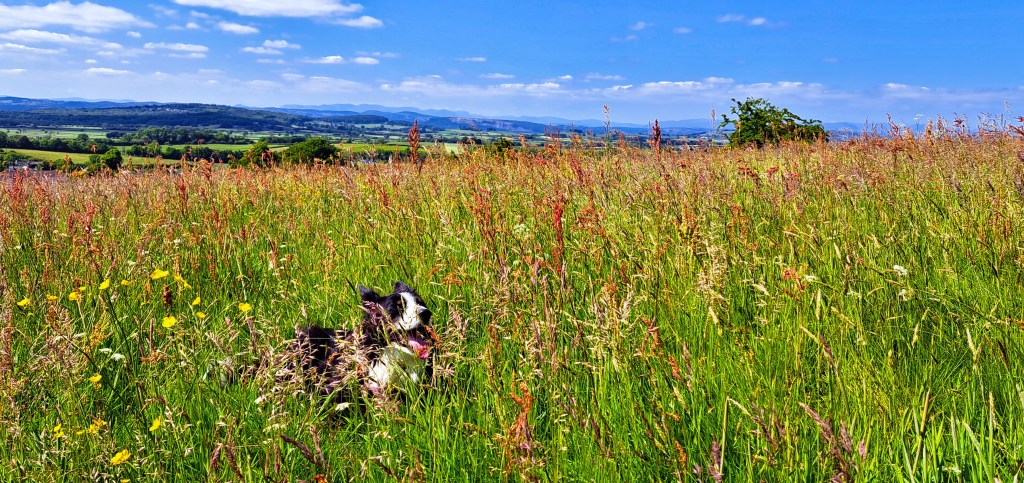
Humpty-dumpty Hill, Burton in Kendal
This last photo, five minutes’ walk from home, was taken a few days ago just before the atmosphere turned the hairdryer on. The air is still clear enough to make out the southern fells on the horizon which have since melted in a shimmering haze or been pounded by towering thunderheads.
Like so many others in our area, this field used to feed thirty-odd rough fell sheep and their lambs year-round. Few farmers are able to keep up their flocks now, and more and more fields are going to grass and wildflower meadows. I guess a lot of them voted for Brexit in the belief that they’d be better off than under the EU’s Common Agricultural Policy. Aggrieved, no doubt, at seeing all our money going to French wine-growers and Danish pig-farmers and Spanish fishermen. Hay fever is apparently at record levels….
The plight of the custodians of our stunning scenery should be a worry for us all – I mean, as Jessie could tell you, why on earth would you get on a plane when the sun shines like this on our islands?


 Junction 36
Leave a reply to bernsmarshall Cancel reply