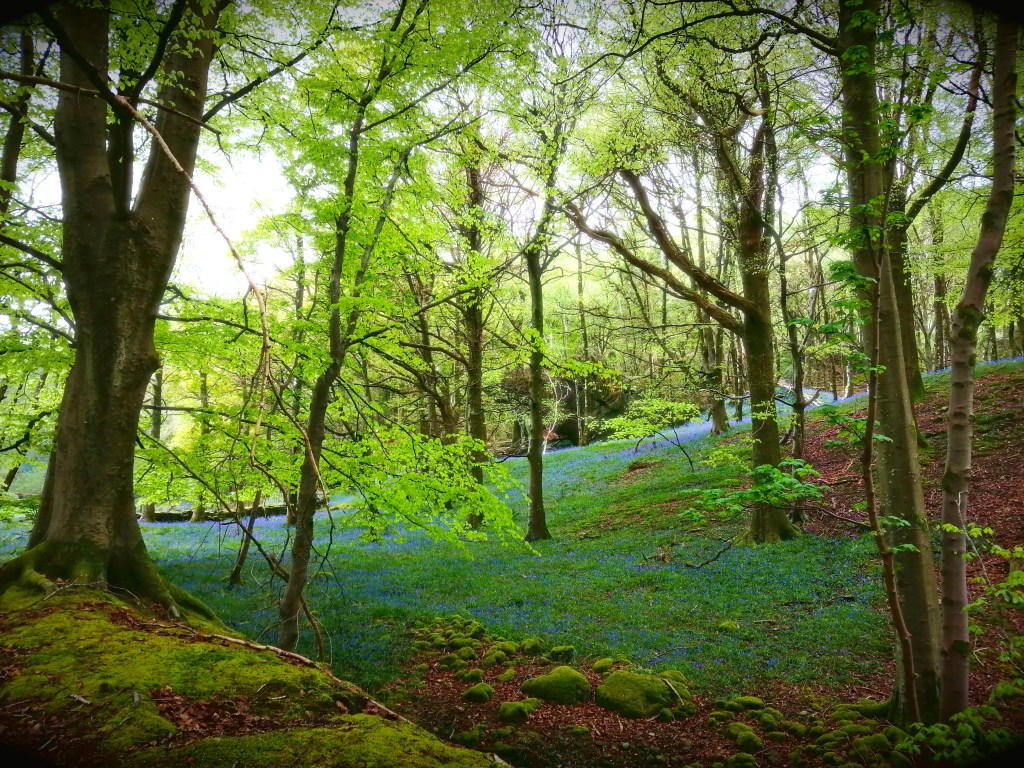
Bluebell wood, Rusland valley
‘Invasive species’ is a heavily loaded pair of words to bandy about in 21st century Britain and I do so with trepidation, especially having had the misfortune this week to catch a couple of Richi’s henchpeople on the radio. Their words left me in no doubt that they drift off every night bleating ‘Stop the boats’ into their Egyptian cotton pillows.
They know that they never will of course – it’s a slogan of succour for worried former ‘red-wall’ ears. As anyone with more than an under-nourished radish in their noggin realises, migration is a ceaseless function of resource inequality; movement of people over water being as ancient as the first dugout canoes and as fundamental as our need to secure the basic necessities of human existence. Of course, things are a little more complex today as this 13 year-old Australian cartoon niftily illustrates:

Kudelka cartoons, The Australian 2010
Confining the movement of other species to their native lands is, or should be, a much simpler proposition. Yet it is one which the inhabitants of our isles, possibly more than those in any other, have monumentally managed to stuff up. Split infinitives and carelessly placed adverbs are small beer compared to the ravages of grey squirrels and Japanese knotweed.
From the stately sycamore, beneath whose heaving sticky florets any fungus worthy of the table refuses to flourish, to the silken American mink who continues to lay single-handed waste to our beloved Ratty, we’ve flamboyantly invited them all to do their worst on our shores.
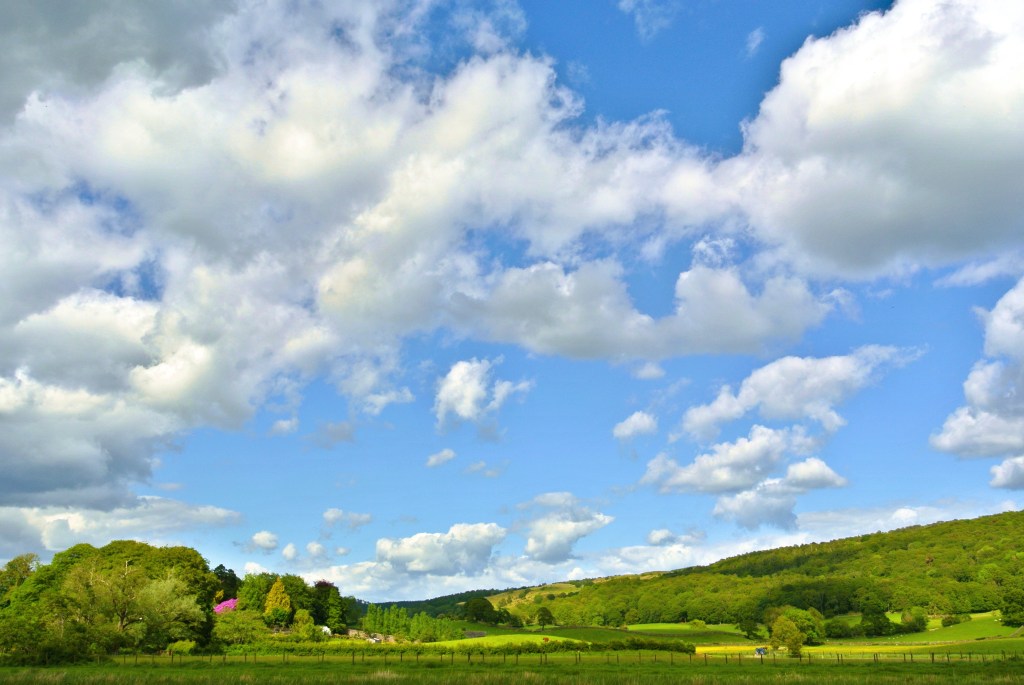
Stomping around resplendent Rusland valley the other day, we were treated to woods awash with seas of electric bluebells. Not their intoxicating scent though, it not being a particularly warm day. Native British bluebells of course, not their Spanish cousins whose bigger, brasher, unscented and altogether more vulgar trumpets were rampant in the local gardens, waiting to pounce.
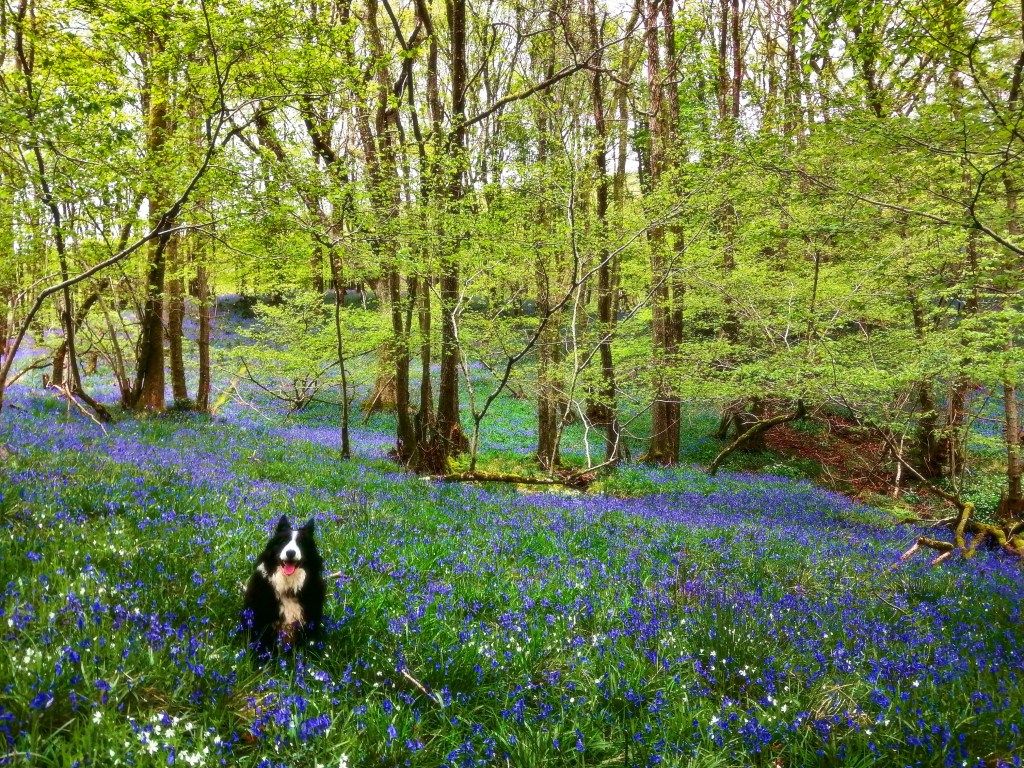
Hazel, bluebells, stitchwort and Jessie‘s tongue
But hang on a moment, how do I know how native our delicate little bluebells are? Just because they’ve graced our glades since before we were able to record our natural history doesn’t mean that they didn’t supplant some other, even more impossibly beautiful bloom when they, who knows, hitched a ride here with some pissed-up visigoths.
It’s well documented that the romans did nothing for us – apart from sanitation, medicine, education, wine, public order, irrigation, roads, the fresh water system and public health – but they did brighten our early spring immeasurably with the introduction of snowdrops and brown hares.
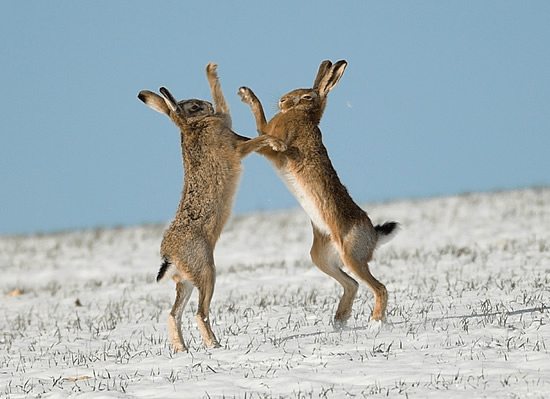
Mad March hares, RSPB photo
Later in our walk, out on the boardwalks over the peat bogs, ducking through dense alder carrs and weaving between stunted Scots pines, we suddenly felt like we were in the middle of a 1970’s Grateful Dead concert. Several of the pungent culprits were lurking in the margins amongst grassy tussocks.
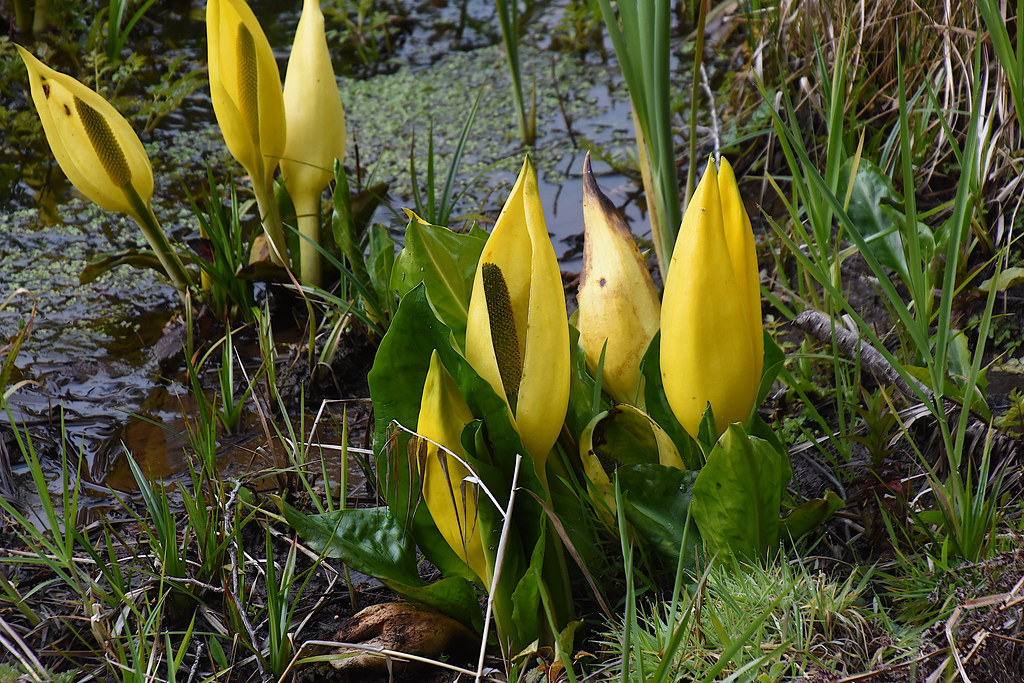
Western skunk cabbage, powerful stuff
Like most problematic species that have managed to ‘jump the hedge,’ this blissed-out stinker was probably imported to our shores by that most invasive of all plunderers, the Victorian plant hunter. These often celebrated botanists were encouraged by wealthy landowners to trawl the empire for spectacularly outlandish plants with which to impress those in their elevated circles.
But before you judge this bygone and elitist form of ‘keeping up with the Joneses’ too harshly, you might cast your eyes over your own or your neighbour’s prize-winning peonies, dazzling delphiniums and even heaven-scented ‘English’ lavenders and reflect that they all originated far from Blighty.
I’ve got no real axe to grind with any of this, but it seems to me that we’re all invaders of one sort or another in these islands; perhaps that’s why we’ve always been such an inclusive country. Imagine what we’d be missing out on if we weren’t.
Invasive rhododendron, Rusland

 Junction 36
Leave a reply to dogdad87 Cancel reply